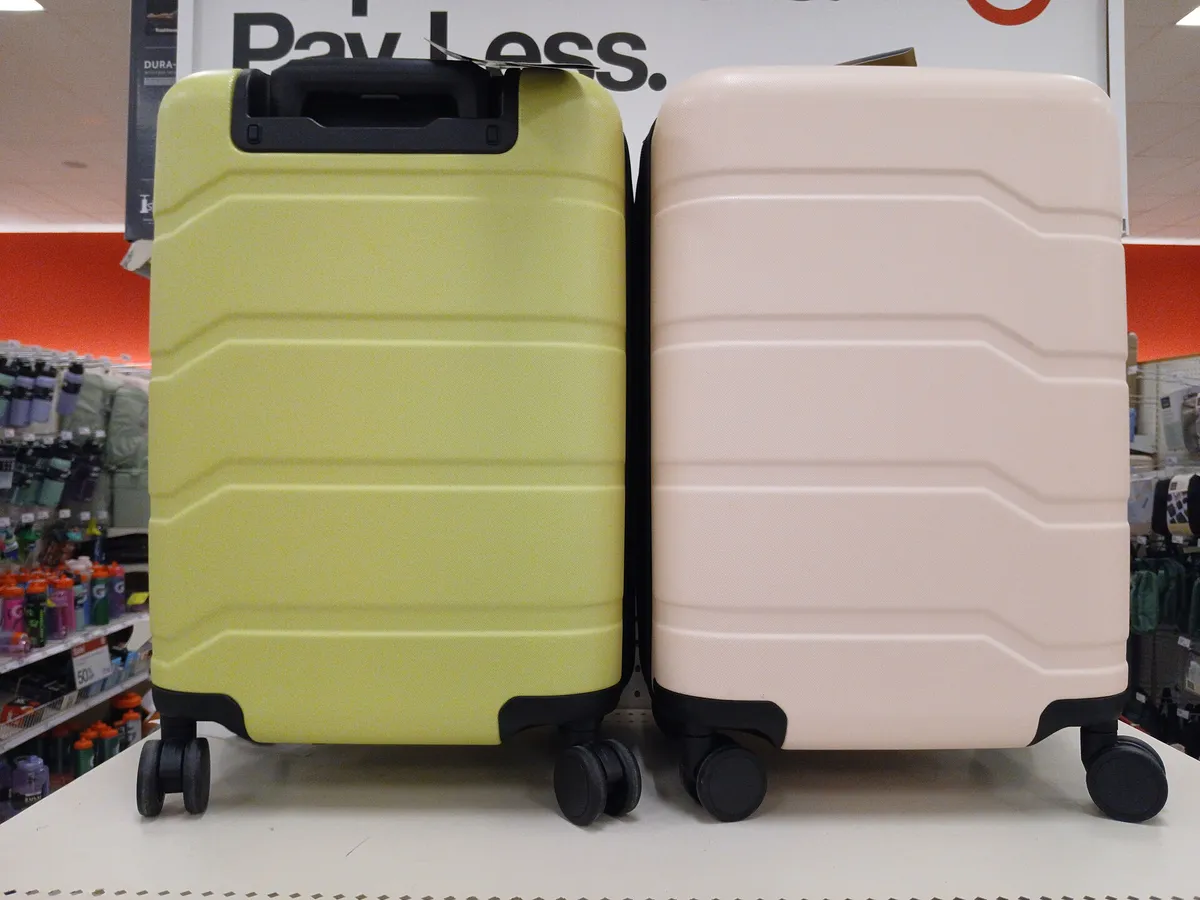
Bags are one of the most natural products to sell in a short video. A creator can pack a carry-on in thirty seconds, drop a tote on a café table, unzip every pocket of a backpack or roll a spinner down a hallway, and the viewer learns more than a product page could tell them. That's why handbags, backpacks, duffels and suitcases keep showing up in TikTok Shop carts.
It's also a category with sharp edges. Fashion accessories sit at the top of TikTok Shop's counterfeit-risk list, and the fastest way to describe a new bag (“it's a dupe of…”) is exactly the wording TikTok tells sellers not to use. Luggage adds dimensions, weight and, for smart bags, lithium batteries. Pre-owned designer bags have their own authentication rules. This guide covers the rules first, then the content, creator and LIVE playbook we'd use to grow a bag or luggage brand on TikTok Shop US.
Short version. List every bag in the most accurate Luggage & Bags category with exact dimensions, package weight and a pure-white-background main image of the real product. Never call a bag a dupe, “inspired by” or “same style as” another brand. If a bag has a built-in battery, get the UN38.3 report and know the FAA carry-on rule before a creator says “check it.” Then sell the bag the way people actually shop for one: what fits inside, how it carries, and how it holds up.
Can You Sell Bags and Luggage on TikTok Shop US?
Yes. New handbags, backpacks, totes, duffels, wallets and suitcases from your own brand can be listed like other fashion products. TikTok Shop's US Product Listing Policy (updated November 6, 2026) requires sellers to pick the most accurate product category, says that listing in the wrong one is a violation that can hit Shop Health, and notes that “some categories require additional approval or documentation prior to listing.” For a new-condition bag from your own brand, the main gate is usually brand authorization for any trademarked name on the product, not a special category license.
The picture changes with who you are and what condition the bag is in:
| Your situation | What to expect |
|---|---|
| Your own bag or luggage brand, new stock | Accurate category, brand authorization for your trademark, full listing details (title, description, brand, images, variations, required warnings), accurate package weight and dimensions |
| Reseller of another brand's new bags | Brand authorization or proof of legitimate sourcing that TikTok may request, plus purchase records you can produce on demand |
| Pre-owned designer or luxury bags | Possible category qualification, a $200 minimum list price, a Certificate of Authenticity per order, signature confirmation and condition grading (details below) |
| Smart luggage with a built-in battery | Dangerous-goods review, a UN38.3 test report for the battery, and copy that matches FAA rules for flying with it |
Listing Rules That Matter Most for Bags
Most bag listings that underperform don't break a rule. They just leave the shopper guessing. TikTok's listing policy happens to push you toward exactly the information bag shoppers need.
Images
Sellers can upload up to nine square images, at least 600 × 600 pixels. The main image has to show the front of the product on a pure white background, with no added logos, text, borders or watermarks. The other images should show the back, sides and details, and may include styled scenes, close-ups and size comparisons, but not multiple shots of the same angle. Placeholders and digital renderings aren't allowed, and images must include only what the customer will receive. That last rule catches a lot of bag listings: if the hero shot shows a bag stuffed with a laptop, a water bottle and a scarf that don't ship with it, it needs to be clear that those are props, or they shouldn't be in the photo.
For bags, the images that do the selling are the interior shot (every pocket and sleeve visible), a strap or handle close-up, a hardware and zipper close-up, the bag on a person for scale, and a packed-versus-empty comparison for anything meant to hold a lot.
Dimensions, weight and variants
The policy requires accurate package weight and dimensions in Seller Center, and for non-fashion items, dimensions such as length, width, height or volume. Give bag shoppers both: exterior dimensions, the laptop sleeve's fit if there is one, strap drop or adjustable range, empty weight, and capacity in liters for backpacks, duffels and suitcases. For luggage, list whether the stated dimensions include wheels and handles, because that's how most shoppers check carry-on fit. Airline size limits vary by carrier, so state your bag's measurements and let the shopper compare, rather than promising it fits every airline.
Colors and sizes belong in variations on one product page, not as separate listings. TikTok prohibits duplicate listings and requires all valid size, color and style variations to sit under a single product detail page. It also bans repurposing an old listing for a different product, which some sellers try when a new colorway launches.
Titles and descriptions
Titles must include the brand (with authorization), the product type and the essentials needed to identify the item, and size and color information belongs in the variation titles, not the main title. A clean bag title reads like “Brand 22 in Carry-On Spinner Suitcase Hardside”. Save the adjectives for the description, where you should state materials honestly (genuine leather, vegan leather or polyurethane, nylon, canvas, polycarbonate, ABS). Listings must also show any legally required warnings, including California Proposition 65 warnings where they apply.
The Dupe Problem
Designer “dupes” are a huge content genre on TikTok, and bags are at the center of it. That creates a trap for brands. TikTok Shop's US guidance on counterfeits and knockoffs treats products marketed with words like “dupes,” “similar to,” “replicas” or “inspired by” as trademark infringement, and its LIVE auction guidance names fashion accessories as a high-risk category for counterfeits. It also flags “brand same style” language in titles, and hiding brand identifiers behind stickers, filters or misspellings.
What that means in practice:
- No other brands' names in your listing or your briefs. Not in titles, descriptions, hashtags, or a creator's on-screen text.
- Watch the design, not just the words. TikTok tells sellers of unbranded products to check overall design, appearance and brand identifiers for “substantial similarity” to branded products. A bag that copies a signature shape, hardware or monogram can be a problem even if nobody says the word “dupe.”
- Sourcing is your defense. TikTok's own tip is blunt: if a supplier's price is much lower than the market, the product may be counterfeit and shouldn't be listed. Keep invoices and factory records for every SKU.
- Brief creators on this explicitly. Affiliates are used to filming dupe content. A creator who calls your bag “the [designer] dupe” in a video can bring the violation to your listing.
The good news is that original bags don't need the comparison. Describe the bag by what it does: what fits, how it carries, what it's made of and where it goes. Our guide to claims and banned words covers the wider language rules, and our counterfeit and IP protection guide covers what to do when someone knocks off your bag.
Launching a bag line on TikTok Shop?
We build creator programs, claim-safe briefs and LIVE shows for fashion and accessories brands, with listings and creator language checked before anything goes live.
Apply to Work With Us →Smart Luggage and Lithium Batteries
Suitcases and backpacks with USB charging, built-in power banks, trackers, digital scales or motors bring battery rules with them. TikTok Shop's US Dangerous Goods Requirements name lithium battery products as a common example of dangerous goods and say sellers must upload a UN38.3 lithium battery test report, alongside a manufacturer's safety data sheet that matches the exact product when one is required. A generic or borrowed document doesn't count. If a product already listed is later identified as a dangerous good, the policy gives a 90-day grace period to submit the SDS.
Then there's what your creators say. The FAA's PackSafe guidance says baggage with lithium batteries must be carried on unless the batteries are removed, and it may only be checked with the battery installed if the battery is very small (no more than 0.3 grams of lithium metal or 2.7 watt-hours for lithium-ion). Removed batteries follow the spare-battery rules, which means they travel in the cabin. So:
- If your battery is removable, show the removal on camera. It's a selling point, and it's the honest answer to “can I check this?”
- Don't let creators say a smart bag can be checked with its power bank inside.
- Individual airlines can be stricter than the FAA baseline. Tell shoppers to check with their carrier rather than promising airline acceptance.
Many brands avoid the whole issue with a simple USB pass-through port and no battery included, which turns the bag back into a regular listing. If you do sell a battery, our oversized and heavy item fulfillment guide is also worth reading before you ship large checked-size cases.
Pre-Owned Designer Bags: A Separate Rulebook
Resale of luxury bags is one of TikTok Shop's busier LIVE niches, and it runs on rules that new-bag brands never touch. Under TikTok Shop's US Pre-Owned Products Requirements (updated October 29, 2026):
- Anything with opened packaging counts as pre-owned.
- Pre-owned luxury bags, luggage and accessories may require category qualification, must carry a list price of at least $200, and must be in at least “Good” condition. “Fair” items aren't eligible, and if you're torn between two grades, you must use the lower one.
- Every order needs a Certificate of Authenticity, from an approved third-party authenticator or the seller's approved in-house program, submitted within 24 hours of purchase (excluding weekends and holidays). The approved third parties listed are Entrupy, Real Authentication, LegitMark, LegitApp and CheckCheck. Orders can be canceled if TikTok can't validate the COA.
- Sellers must buy signature confirmation, add shipping insurance on items worth $250 or more, allow a one-hour cancellation window, and accept returns only for items damaged or defective on arrival.
For new-bag brands, the takeaway is simpler: if you sell open-box returns or sample stock, those units are pre-owned by TikTok's definition and shouldn't be listed as new.
Content That Sells a Bag
Bag buyers want to know three things: what fits, how it carries and whether it'll last. The formats that answer those questions in a few seconds are the ones that convert.
- “What fits” pack-ins. Load the bag with real, everyday items on camera: laptop, charger, water bottle, a change of clothes. For luggage, a timed pack for a three-day trip. Show the bag closing.
- Pocket tours. Unzip and open every compartment in one continuous shot. Interior organization is a top reason people pick one bag over another, and it barely shows up in still photos.
- Carry tests. Walk, climb stairs, run for a train. Show strap adjustment, padding and how the bag sits on different body types and heights.
- Durability and build close-ups. Zippers, stitching, wheels, telescoping handle, corners. Show real drops or rolls only if they're genuine, and don't stage tests the bag wasn't designed for.
- Day-to-night or one-bag-three-outfits styling. Works for handbags, crossbodies and totes, where shoppers buy on how a bag fits their wardrobe.
- Travel-day POV. Airport walk, overhead bin, hotel unpack. Strong for carry-ons, but keep size claims to your measured dimensions.
Gift timing matters too. Bags and travel gear are classic holiday and graduation gifts, so build gift-angle content into your Q4 plan rather than reusing everyday videos.
Recruiting and Briefing Bag Creators
The best bag creators aren't always fashion creators. Look at commuters, students, travel creators, flight attendants and frequent flyers, parents who carry everything, photographers, gym-goers and work-from-anywhere creators. Their audiences buy bags because of a problem the creator already talks about.
A good bag brief includes:
- The exact measurements, capacity and weight, so the creator's claims match the listing.
- Two or three real use cases to film, with the “what fits” items suggested.
- A short no-say list: no other brands' names, no “dupe,” “inspired by” or “same as,” no “fits every airline,” no “waterproof” unless you've tested to a standard, and no “genuine leather” unless it is.
- Which colorway to feature, matched to your inventory, so a viral video doesn't sell out a color you can't restock.
Send samples in the colorways you have depth in, and give creators enough time with the bag to use it for real. Our creator brief template and product seeding guide go deeper on both.
Bags on TikTok LIVE
LIVE suits bags because viewers can ask for exactly the shot they want. Common LIVE formats that work in the category:
- Request-driven packing. Viewers name an item and the host packs it in to show what fits.
- Color and size walk-throughs. Hold every colorway in the same light, and every size side by side.
- Inside-out inspections. Turn the bag over, open every pocket and show the hardware up close.
- Bundles. A carry-on and a matching personal item, or a tote with a pouch. Use real bundle pricing and real savings only.
For pre-owned luxury resale, LIVE is also where condition has to be shown honestly: hosts should point out wear, corners and interior marks that match the listing's condition grade.
How We Sequence a Bag or Luggage Launch
- Listings first. Correct category, brand authorization, white-background main images, interior and detail shots, dimensions and weight, variants on one page.
- Battery check. For smart bags, the UN38.3 report and SDS ready before launch, and creator copy that matches FAA rules.
- Seed 20 to 50 creators across travel, commuting and style niches with a no-say list, then watch which use cases get people talking.
- Double down on the winning use case. Turn the best-performing organic videos into Spark Ads and brief the next wave of creators around them.
- Add LIVE once there's demand to answer, using the formats above.
- Plan inventory by colorway. Bags often sell out by color, not by style, so watch which color the content drives.
Frequently Asked Questions
Can you sell handbags and luggage on TikTok Shop?
Yes. New bags and luggage from your own brand can be listed in TikTok Shop's Luggage & Bags category. You'll need accurate category selection, brand authorization for any trademarked name, complete listing details, a white-background main image and accurate package weight and dimensions. Pre-owned luxury bags and smart luggage with batteries have extra requirements.
Can I call my bag a dupe of a designer bag on TikTok Shop?
No. TikTok Shop's US counterfeit guidance treats products promoted as “dupes,” “similar to,” “replicas” or “inspired by” as trademark infringement, and it flags “same style” language in titles. Describe the bag by its features, materials and use cases instead, and keep other brands' names out of listings, hashtags and creator videos.
What do I need to sell pre-owned designer bags on TikTok Shop?
Pre-owned luxury bags may require category qualification, must be listed at $200 or more and in at least Good condition. Each order needs a Certificate of Authenticity from an approved third-party authenticator or approved in-house program within 24 hours, excluding weekends and holidays. Signature confirmation is required, and insurance applies to items worth $250 or more.
What extra rules apply to smart luggage with a battery?
TikTok Shop treats lithium battery products as dangerous goods and requires a UN38.3 test report, plus a matching safety data sheet when requested. For travel, the FAA says bags with lithium batteries must be carried on unless the battery is removed, apart from very small batteries. Creators shouldn't tell viewers they can check a smart bag with its battery installed.
What should a bag listing show on TikTok Shop?
A front-view main image on a pure white background, plus back, side, interior, strap and hardware shots, and a size comparison or on-body image. The description should give exterior dimensions, capacity, empty weight, materials and strap details, with colors and sizes as variations on one page.
What bag content works best on TikTok Shop?
Content that answers what fits, how it carries and whether it lasts: real pack-ins, full pocket tours, carry tests, close-ups of zippers and wheels, styling videos for handbags and travel-day POVs for luggage. Keep size and durability claims to what you've measured or tested.