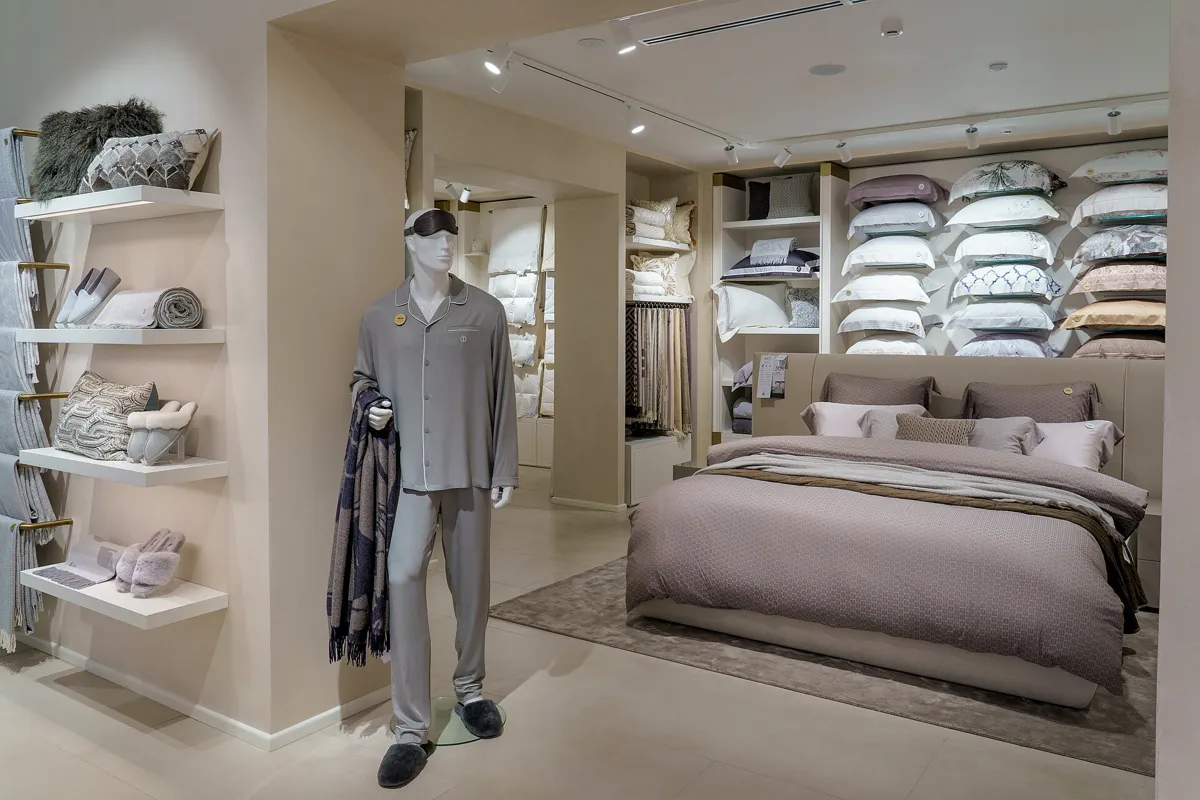
Bedding sells on feel, and feel is hard to sell through a screen. That is exactly why short video works for this category. A creator can pour water on a “cooling” sheet, punch a pillow and let it rebound, unroll a compressed topper and time how long it takes to rise, or crawl under a weighted throw and say nothing for five seconds. Those moments do what a product photo never can, and they are why sheets, pillows, toppers and loungewear keep showing up in TikTok Shop haul and “bed makeover” content.
It is also a category where the paperwork is heavier than it looks. Mattresses and mattress pads have federal flammability standards. Children’s sleepwear has its own. Crib bumpers and inclined infant sleepers are banned outright, and federal safety agencies warn against weighted products for babies. And sleep is a health topic, so a creator who says a pillow “fixes” neck pain or a spray “cures” insomnia is making a claim the brand has to stand behind. This guide sorts the catalog, walks through the rules and claims, then covers content and launch.
Short version. Sort your catalog first: mattresses, toppers and pads; sheets, duvets and pillows; sleepwear; and anything for babies or kids. Each bucket has different testing and labeling duties. Keep claims to what a camera can show, get substantiation before you say anything about pain, sleep quality or chemicals, plan for big boxes and returns, and brief creators on demonstrations rather than promises.
Why Bedding Works on TikTok Shop
Three things make bedding a good fit. First, demonstrations: compression and rebound, water tests, wrinkle tests out of the dryer and side-by-side texture close-ups all show the product working. Second, the room makeover format: a creator strips a tired bed and remakes it with your set, which shows every SKU in one video and invites bundle purchases. Third, gifting and seasonality: throws, pillowcases and pajama sets are easy gifts, and our Q4 strategy guide covers how holiday demand changes pacing.
The hard parts are just as clear. Returns are costly for bulky items, color and texture can look different on camera, and sizing (twin XL, full, queen, king, California king, deep pockets) creates fit complaints when listings are vague. A strong bedding catalog fixes those before it spends on creators.
Lane 1: Sort the Catalog by What Regulates It
Most bedding brands carry products from several regulatory buckets without realizing it. Start with a simple sort:
| Product type | What applies | What to check first |
|---|---|---|
| Mattresses and mattress sets | CPSC flammability: 16 CFR 1632 (cigarette ignition) and 16 CFR 1633 (open flame) | Prototype testing, records, permanent labels |
| Mattress pads and toppers | 16 CFR 1632 for mattress pads | Whether your topper is treated as a pad; test reports |
| Sheets, duvets, pillows, throws | General fabric flammability and labeling rules; state rules for stuffed articles in some states | Fiber content labels, care labels, any state registration |
| Children’s sleepwear | CPSC children’s sleepwear standards, 16 CFR 1615 and 1616 | Flammability testing or tight-fitting design, hang tags, children’s product certificate |
| Baby and crib products | Safe Sleep for Babies Act bans; CPSC infant sleep rules; children’s product testing | Whether a product is banned before anything else |
If anything in your catalog is designed or intended primarily for children 12 and younger, it is a children’s product for CPSC purposes, which brings third-party testing and a Children’s Product Certificate. Our product certification and CPSC compliance guide covers how that paperwork works and what platforms tend to ask for.
Lane 2: Mattresses, Toppers and Pads
CPSC sets two federal flammability standards for mattresses. The cigarette ignition standard at 16 CFR 1632 covers mattresses and mattress pads; the open-flame standard at 16 CFR 1633 covers mattress sets. CPSC summarizes the pass criteria plainly: under 1632, char may not extend more than two inches from a lit cigarette; under 1633, the mattress set must stay at or below a peak heat release rate of 200 kilowatts and a total heat release of 15 megajoules in the first ten minutes of the test.
Those standards also carry business duties. Manufacturers and importers must test prototypes before selling, keep test, manufacturing and quality-control records for the period of production plus three years, and attach the required permanent labels. If you are a brand reselling a mattress made by a contract manufacturer, ask for the test reports and the label artwork before you list, not after a customer asks.
Mattress-in-a-box and roll-packed toppers add a logistics layer. They ship heavy and bulky, and a return is expensive. See our guide to oversized and heavy item fulfillment before you set free shipping or a no-questions return window.
Launching a bedding brand on TikTok Shop?
Sold Out Brands builds compliant catalogs, creator programs and LIVE shows for home and sleep brands. Limited partner spots.
Apply to Work With Us →Lane 3: Babies, Kids and Weighted Products
This is the lane where a product can be illegal to sell, not just mislabeled. The Safe Sleep for Babies Act, signed May 16, 2022 and effective November 12, 2022, makes inclined sleepers for infants and crib bumpers banned hazardous products. CPSC defines an inclined sleeper for infants as a product with a sleep surface inclined more than 10 degrees that is intended, marketed or designed for an infant up to 1 year old. Crib bumpers include padded bumpers, vinyl bumper guards and vertical crib slat covers; a non-padded mesh crib liner is not included. The ban covers selling, offering for sale, manufacturing for sale, distributing and importing.
Weighted products for babies are the next red flag. CPSC’s safe sleep guidance says not to use weighted blankets or weighted swaddles for babies, and a CPSC commissioner’s April 2024 statement pointed to matching warnings from CDC and NIH and to infant deaths in these products. Several large retailers said they would stop selling weighted infant products shortly after. A bedding brand selling weighted blankets for adults should make sure nothing in the listing, the imagery or a creator’s video suggests the product is for an infant.
Children’s pajamas in sizes above 9 months through 14 fall under CPSC’s children’s sleepwear flammability standards. Garments either meet the flame-resistance tests or qualify as tight-fitting under the rules, which have specific dimension and labeling requirements. Our baby and kids brands guide covers the broader children’s product side.
Check bans before briefs. If a SKU could be read as a crib bumper, an inclined infant sleeper or a weighted infant product, stop and get a regulatory opinion before it goes anywhere near a creator. No amount of good content fixes a banned product.
Lane 4: Claims That Get Bedding Brands in Trouble
Bedding claims tend to drift in three directions: chemicals, certifications and health.
Chemical and “natural” claims
In 2013 the FTC settled with Essentia Natural Memory Foam over claims that its mattresses were free of harmful VOCs, chemical-free, had no off-gassing or odor and were made of 100 percent natural materials. The FTC said the claims were unsubstantiated. The order allows a VOC-free claim only if emissions are zero micrograms per cubic meter or the company has competent and reliable scientific evidence of no more than a trace level, as the Green Guides describe. Similar cases were brought against other foam mattress sellers. “Non-toxic,” “chemical-free” and “zero off-gassing” are the phrases to keep out of creator scripts unless you hold the evidence.
Seals and certifications
In 2017 the FTC finalized an order against Moonlight Slumber, a baby mattress maker, over a “Green Safety Shield” that looked like a third-party certification but was the company’s own logo. The Green Guides say it is deceptive to imply a third party has endorsed or certified a product when it has not. Show a certification only if it is real, current and covers the exact product, and name the certifier.
Health and sleep claims
“Helps you fall asleep faster,” “relieves back pain” and “clinically proven” are health claims. The FTC’s position for health-related claims is that they need competent and reliable scientific evidence. That is a high bar for a pillow. The practical rule for creators: describe what they can show and feel (firmness, height, how it rebounds, how it feels after a week), and leave out diagnoses, conditions and promises about sleep outcomes. Our claims and banned-words guide has phrase-level examples.
| Instead of | Say or show |
|---|---|
| “Cures my insomnia” | “This is what I’ve slept on for two weeks,” plus the texture and height on camera |
| “Fixes neck pain” | Loft and firmness shown side by side with an old pillow |
| “Totally non-toxic” | Only certifications you can document, named exactly |
| “Ten degrees cooler” | A water-wicking or breathability demo, unless you hold test data for the number |
Listings That Cut Returns
Most bedding returns come from mismatched expectations: the color was warmer than it looked, the fitted sheet did not reach over a deep mattress, the pillow was flatter than expected. Fix the listing first:
- Size table with real dimensions. Flat and fitted sheet dimensions in inches, pocket depth and the mattress depth range it fits.
- Fiber content and weave named plainly. “100% cotton percale” or “polyester microfiber” tells a buyer more than “luxury feel.”
- Daylight photos and a color note. One un-retouched photo near a window, and a line that colors vary by screen.
- Fill and firmness for pillows. Fill type, fill weight if you know it, and an honest firmness description for back, side and stomach sleepers.
- Care instructions. Wash and dry settings in the listing, not only on the label, so buyers do not shrink a set and blame the product.
Bundles fit this category naturally: a sheet set plus pillowcases, a duvet cover plus inserts, a throw plus a matching pillow cover. Our bundle and multi-buy guide covers how to price and list them without confusing variants.
Creator Briefs for Bedding
The best bedding videos are quiet and physical. Brief for these formats:
- The unboxing rise. Compressed toppers and pillows expanding on a time-lapse. Tell creators the expansion time from your own testing, not a guess.
- Strip and remake. Old bedding off, your set on, finished bed reveal. Ask for natural light and a wide final frame.
- The touch close-up. Hand across the fabric, a crumple and release, the drape over an edge.
- The week-later check-in. Same creator, same bed, after real use and a wash. This answers the “does it pill?” question honestly.
- The fit test. Fitted sheet on a deep mattress, corners shown.
Put the claims list in every brief: what creators may say, what they may not, and the exact names of any certifications. Require disclosure of the paid or affiliate relationship, as covered in our creator disclosure guide. For samples, bulky items cost real money to ship, so qualify creators on audience fit and past content quality before sending a mattress topper. Pillowcases or a sample swatch can screen for interest first.
A Launch Sequence That Fits the Category
- Compliance pass. Sort the catalog, collect test reports and labels, remove or rework anything that touches a banned infant category.
- Listing pass. Size tables, fiber content, care, daylight photos, bundle structure.
- Seed a small creator group. Ten to twenty creators with real bedrooms and home or lifestyle audiences, briefed on demonstrations and the claims list.
- Find the winning demo. Watch which format earns watch time and orders, then brief the next group on that format.
- Add LIVE once you have a hero SKU. A bed on set, a host who can show texture up close and answer sizing questions in real time.
- Watch returns weekly. Read return reasons by SKU and fix the listing or the product before scaling spend.
If your catalog leans toward furniture as well as textiles, our furniture and home decor guide covers bed frames, headboards and freight-heavy items.
Frequently Asked Questions
Do mattresses sold on TikTok Shop have to meet federal flammability standards?
Yes. CPSC requires mattresses to meet both 16 CFR 1632 (cigarette ignition) and 16 CFR 1633 (open flame), and mattress pads to meet 1632. Manufacturers and importers must test prototypes before sale, keep records and attach permanent labels. The sales channel does not change those duties.
Can I sell crib bumpers or inclined baby sleepers?
No. Under the Safe Sleep for Babies Act, effective November 12, 2022, crib bumpers and inclined sleepers for infants (sleep surface inclined more than 10 degrees, for babies up to 1 year) are banned hazardous products. It is unlawful to sell, offer for sale, manufacture for sale, distribute or import them. Non-padded mesh crib liners are not included in the bumper definition.
Are weighted blankets allowed?
Weighted blankets for adults are a common product. Weighted products for infants are a different story: CPSC’s safe sleep guidance says not to use weighted blankets or weighted swaddles for babies, and CDC and NIH have issued similar warnings. Keep adult weighted blankets clearly adult in listings, images and creator content.
Can creators say our pillow helps with neck pain?
That is a health claim, and the FTC expects health claims to be backed by competent and reliable scientific evidence. Unless you hold that evidence, brief creators to show loft, firmness and how the pillow feels to them, and to avoid naming conditions or promising outcomes.
Is it safe to call our foam “non-toxic” or “VOC-free”?
Only with evidence. The FTC’s 2013 order against a memory foam mattress company allowed VOC-free claims only at zero emissions or with competent and reliable evidence of no more than trace levels. Name real certifications exactly instead of making broad chemical claims.
What content formats sell bedding best?
Physical demonstrations: compressed products expanding, strip-and-remake reveals, close-up texture shots, fitted-sheet corner tests and honest week-later check-ins after a wash. They show the product doing the work without leaning on claims.
Sources: CPSC, Mattresses, Mattress Pads & Mattress Sets; eCFR, 16 CFR Part 1633; CPSC, Safe Sleep for Babies Act Business Guidance; CPSC, Safe Sleep – Cribs and Infant Products; CPSC Commissioner statement, weighted infant swaddles and blankets (April 15, 2024); FTC, Essentia Natural Memory Foam consent order analysis (2013); In re Moonlight Slumber, LLC, FTC Docket No. C-4634 (2017).