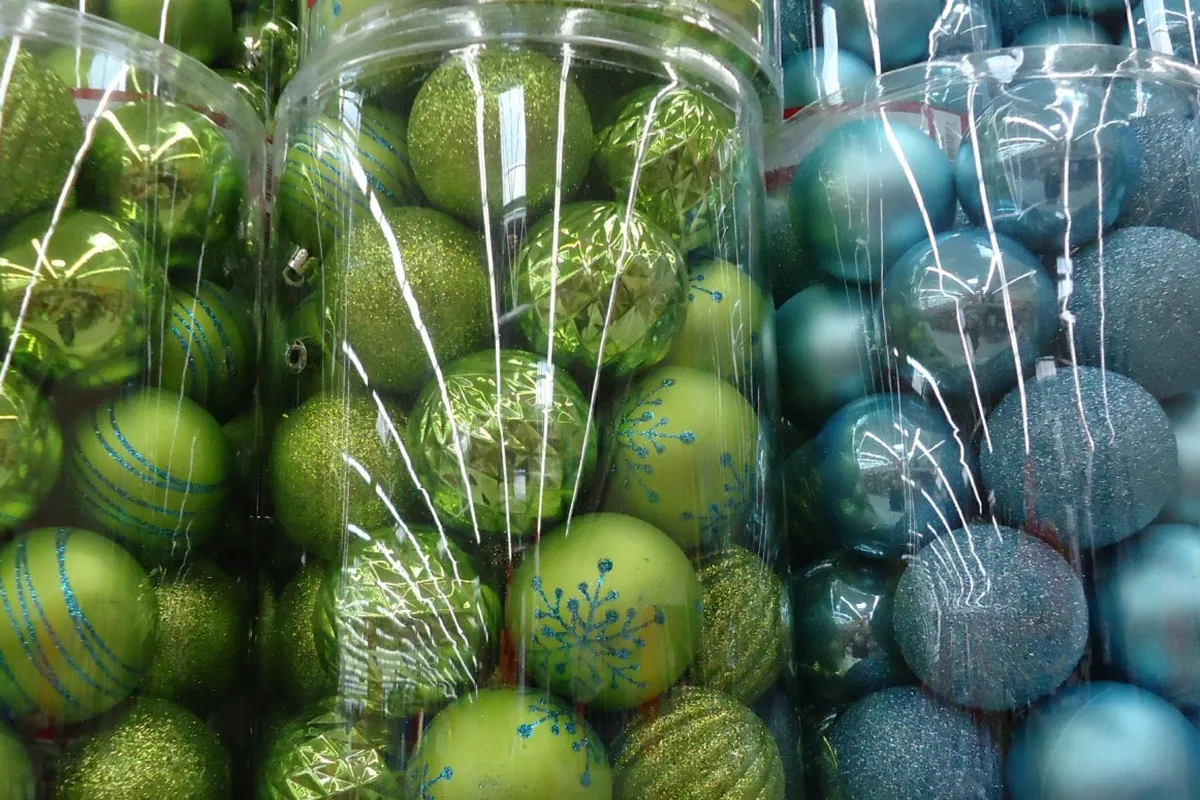
Holiday decor is one of the few categories where the product sells itself the second it switches on. A creator plugs in a string of lights, the room goes warm, and the video does the rest. Tree reveals, porch makeovers, “decorate with me” LIVEs and ornament hauls are some of the most watchable formats on the platform every November and December, and every view is a shopping moment.
It is also a category with a hard stop. Christmas decor that hasn’t sold by late December mostly sits in a warehouse until the next November. And it carries more safety paperwork than most brands expect, because so much of it plugs in, lights up or runs on coin batteries, and because the people buying it often have small children and pets at home. This guide covers both halves: how to sort a seasonal catalog by the rules that apply to it, what claims get decor brands in trouble, which content formats actually move units, and how to plan the season so you don’t end it with a pallet of inflatable snowmen.
Short version. Sort your catalog into plug-in lighting, battery-powered decor, items aimed at children, trees, and candles. Plug-in seasonal lights have specific federal requirements (wire size, strain relief and fuses under 16 CFR 1120 and UL 588). Anything with a button or coin battery falls under Reese’s Law. Keep fire and safety claims exact, show the product working on camera, put dimensions, bulb counts and power details in every listing, and plan inventory around a selling window that closes fast.
Why Seasonal Decor Works on TikTok Shop
Decor is visual, demonstrable and emotional, which is the exact profile that converts in short video. Three formats do most of the work. The transformation (a bare tree or plain porch, then the switch flips) shows every SKU in the set and invites bundle purchases. The single-product “watch this” clip (a projector light, an animated figure, a color-changing string) makes a mid-priced impulse buy feel obvious. And the LIVE decorating stream lets a host answer the questions that kill decor conversions: how tall is it, is it plug-in or battery, will it work outside, does it come with the stakes.
The economics cut the other way too. Seasonal demand is compressed into a few weeks, shipping timelines matter more than usual because a tree topper that arrives on December 27 is a return, and the category is crowded with near-identical generic products. Brands that win in decor usually do it with a recognizable hero product, clean listings and creators who post early enough for the algorithm to find them before the peak.
Step 1: Sort the Catalog by What Regulates It
A typical holiday catalog spans several regulatory buckets. Sort it before you seed a single creator:
| Product type | What applies | What to check first |
|---|---|---|
| Plug-in string lights, lighted figures, wreaths, light sculptures | CPSC Substantial Product Hazard List, 16 CFR 1120, which points to UL 588 for wire size, strain relief and overcurrent protection | Test reports and the physical product: wire gauge, fuses in the plug, strain-relief performance |
| Battery LED decor: fairy lights, flameless candles, musical or light-up ornaments | Reese’s Law, 16 CFR 1263 (button and coin batteries) | Secured battery compartment, warning on packaging, product and instructions |
| Ornaments, stockings and decor marketed to kids | Children’s product rules, including the small-parts ban for items intended for children under 3 | Who the product is designed and marketed for; any Children’s Product Certificate |
| Artificial trees and garland | No single tree-specific federal standard; general safety and accurate labeling | Test data behind any “fire resistant” claim |
| Candles and wax melts | Labeling, fragrance and fire-safety practices covered in our candle guide | Warning labels and burn instructions |
| Outdoor inflatables and projectors | Plug-in electrical products; outdoor-use ratings matter | Whether the product and its cord are rated for outdoor use |
If any of your SKUs is designed or marketed primarily for children 12 and younger, it is a children’s product for CPSC purposes, which brings third-party testing and a Children’s Product Certificate. Our product certification and CPSC compliance guide explains that paperwork and what to have ready if a listing gets flagged.
Step 2: Plug-In Holiday Lights Have Their Own Rule
Most sellers know holiday lights should be “UL listed.” Fewer know that CPSC turned three parts of that voluntary standard into a federal line in 2015. Under 16 CFR 1120.3, seasonal and decorative lighting products that lack any one of three readily observable characteristics in UL 588 are deemed a substantial product hazard: minimum wire size (section 6), sufficient strain relief (sections 15, 71, 79 and SB15) and overcurrent protection (section 7).
The rule covers portable, plug-connected, temporary-use lighting with a nominal 120-volt input. That includes string sets and lighted decorative outfits such as stars, wreaths, candles without shades, light sculptures, blow-molded plastic figures and animated figures. CPSC’s Federal Register notice spells out what each characteristic means in practice. Series-connected strings need 20 or 22 AWG wire depending on the plug and load fitting. Plugs, load fittings and lampholders have to hold specified weights. And the product needs at least one fuse if the plug is polarized, or two if it isn’t.
What the rule leaves out matters just as much for a TikTok catalog. Battery-operated and solar products are excluded. So are products that run from a transformer or low-voltage power supply, and flexible lighting with non-replaceable lamps sealed in a polymer tube. Those products still have to be safe; they are simply outside this specific rule, and the battery-powered ones usually land under Reese’s Law instead.
Why this matters for a shop: a product that is deemed a substantial product hazard is the kind of thing that leads to recalls, seized imports and listings coming down mid-season. If you source lights from a new factory, get a test report against UL 588 and check the physical samples yourself. Count the fuses in the plug. Read the wire gauge printed on the cord. Pull gently on a socket. It takes ten minutes and it is exactly what a regulator would look at.
Selling holiday decor on TikTok Shop?
We build compliant seasonal catalogs, recruit decor creators early and run LIVE decorating streams that sell.
Apply to Work With Us →Step 3: Coin Batteries Are Everywhere in Holiday Decor
Fairy lights in jars, flameless candles, light-up necklaces, musical ornaments and greeting-card style decor often run on button or coin batteries. The American Academy of Pediatrics names string lights, flameless candles, light-up necklaces and musical ornaments and books specifically when it warns parents to secure battery compartments, because a swallowed battery can cause life-threatening injuries.
That is the problem Reese’s Law addresses. CPSC’s rule at 16 CFR part 1263 incorporates ANSI/UL 4200A-2023, and under CPSC’s enforcement discretion it applies to consumer products containing button or coin batteries that were manufactured or imported after March 19, 2024. CPSC summarizes the core requirements this way:
- Compartments holding replaceable button or coin batteries must need a tool, or at least two independent and simultaneous hand movements, to open.
- The batteries must not come loose during use-and-abuse testing.
- The product’s packaging must carry a warning, and the product itself must carry one if practicable.
- Accompanying instructions and manuals must include the applicable warnings.
Separate labeling rules apply to packages of the batteries themselves (including batteries packed with a product), for packages manufactured or imported after September 21, 2024. Zinc-air batteries are outside the rule, and toys that meet the battery requirements of the toy standard at 16 CFR part 1250 are exempt. For a decor brand, the practical step is simple: list every SKU that uses a button or coin cell, confirm the compartment design and warnings with your supplier, and make sure the warning shows up in your listing images rather than only inside the box.
Step 4: Claims That Get Decor Brands in Trouble
Holiday safety is a real concern for buyers, not a technicality. CPSC reported about 14,900 emergency-room-treated injuries tied to holiday decorating in the November 2022 to January 2023 season, around 160 a day, with nearly half involving falls. NFPA puts the annual average for 2020 to 2024 at 143 home fires that started with Christmas trees and 835 that started with other decorations. Electrical distribution or lighting equipment was involved in 40 percent of the tree fires, and nearly half of the decoration fires happened because decorations were too close to a heat source.
Those numbers are why safety language sells, and why loose safety language gets flagged. A few swaps keep creators persuasive without promising what the product can’t deliver:
| Risky phrasing | Why | Safer version |
|---|---|---|
| “Fireproof tree” | CPSC notes that a “Fire Resistant” label does not mean a tree won’t catch fire | “Labeled fire resistant” (only if your test data supports it) |
| “UL certified” when it isn’t | Certification marks are verifiable and misuse is a fast way to lose trust and listings | Name the exact mark and standard on the product, or say nothing |
| “Totally safe for kids and pets” | An absolute claim you can’t substantiate; small parts and batteries say otherwise | “Battery compartment needs a screwdriver” or “no small parts” if true |
| “Shatterproof” glass-look ornaments | Needs testing to back it | “Plastic ornaments” plus a drop on camera |
| “Indoor/outdoor” on an indoor-rated set | Outdoor use needs an outdoor rating; the AAP and CPSC both tell consumers to check for it | State the rating printed on the product |
Brief creators to show, not certify. Plugging the set into a timer, pointing at the outdoor-use tag, demonstrating a screw-secured battery door or reading the bulb count off the box all build trust without any risky adjectives. CPSC’s own consumer tip of not stringing more than three sets of incandescent lights together is the kind of practical aside that makes a creator sound like they know the category. If you also sell candles or wax melts, our candle and home fragrance guide covers the separate labeling and claims issues there.
Listings That Cut Holiday Returns
Most decor returns come from mismatched expectations: the tree was shorter than it looked, the lights were cool white instead of warm, the inflatable needed an outlet the buyer didn’t have. Fix it in the listing before you spend on creators:
- Size with a human in the frame. Height and width in inches, plus one image of a person next to the product. A 6-foot inflatable and a 6-inch figurine look identical on a white background.
- Power details up front. Plug-in or battery, battery type and whether included, cord length, indoor or outdoor rating, and whether a timer is built in.
- Light specifics. Bulb count, color temperature in plain words (warm white, cool white, multicolor), steady or flashing modes, and whether sets connect end to end.
- What’s in the box. Stakes, tethers, hooks, remote, adapters. Buyers who expect stakes and don’t get them leave one-star reviews in a category where reviews drive the algorithm.
- Storage and reuse. Decor is bought to last years. Showing how it folds or packs away answers the “where will I keep this” objection.
- Delivery honesty. If a SKU ships from overseas or has a long handling time, say so. A late Christmas item is worse than a lost sale.
Content That Moves Decor
The best-performing decor content we see shares one trait: the product changes the room on camera in a single take. Specific formats worth briefing:
- The switch flip. Lights off, then on. No cuts. Works for strings, projectors, lighted figures and pre-lit trees.
- Unbox to lit. From sealed box to glowing in under a minute shows how easy setup is and quietly answers “what’s included.”
- Porch or mantel makeover. Shows multiple SKUs together and pushes bundle carts.
- Ornament hauls and themed trees. Strong for collections with many small SKUs and repeat purchases.
- LIVE decorating streams. A host builds a full display over an hour, pinning each product as it goes up and answering size and power questions live.
- The honest week-later check-in. Still standing after wind, still lit after rain. It earns trust in a category full of flimsy lookalikes.
Timing matters as much as format. Creators need samples in hand before the peak, and posting schedules work best when the first wave of videos lands before buyers start decorating, so the algorithm has time to learn who engages. Our guide to TikTok Shop holiday mode covers what to set up before your own team goes quiet over the holidays.
Plan the Season Around the Hard Stop
Seasonal decor has a selling window, a clearance window and a long off-season. Plan all three before you place the purchase order:
- Before the season. Lock compliance documents, shoot listing images with scale shots, recruit and sample creators, and build the LIVE calendar.
- The peak. Push hero SKUs, refresh creatives weekly and watch stock daily. A sellout on a hero product mid-season can be worse than slow sales, because the momentum moves to a competitor.
- The cutoff. Once standard shipping can no longer arrive before the holiday, shift messaging to gift cards, “for next year” bundles or post-holiday decor like winter and New Year’s themes.
- Clearance and carryover. Decide in advance what gets discounted in late December and what gets stored for next year. Carryover stock that is well packed and photographed becomes next season’s early sellers.
- The rest of the calendar. Many decor brands extend into Halloween, fall, Valentine’s Day, Easter and the Fourth of July so creators, listings and LIVE hosts stay warm all year.
For the reorder math, sell-through tracking and stockout planning, see our TikTok Shop inventory management guide. Seasonal inventory is where most decor brands make or lose the year.
Frequently Asked Questions
Do Christmas lights sold on TikTok Shop have to meet a federal standard?
Plug-in 120-volt seasonal and decorative lighting falls under CPSC’s Substantial Product Hazard List at 16 CFR 1120. Products lacking UL 588’s minimum wire size, sufficient strain relief or overcurrent protection are deemed a substantial product hazard. Battery-operated, solar and low-voltage products are outside that specific rule.
Does Reese’s Law apply to battery holiday decorations?
Yes, if they contain or are designed to use button or coin batteries. Products manufactured or imported after March 19, 2024 must meet ANSI/UL 4200A-2023 through 16 CFR part 1263: a secured battery compartment, use-and-abuse testing and warnings on packaging, on the product if practicable and in instructions. Zinc-air batteries are excluded.
Can creators call our artificial tree fireproof?
No. CPSC advises shoppers to look for a “Fire Resistant” label and notes that the label doesn’t mean the tree won’t catch fire. Use the exact label you can support with test data, and never “fireproof.”
Are ornaments children’s products?
Most ornaments are general-use decor. An ornament, stocking or decoration designed or marketed primarily for children 12 and younger is a children’s product, which brings third-party testing and a Children’s Product Certificate, and items intended for children under 3 can’t contain small parts.
When should a holiday decor brand start working with creators?
Well before buyers start decorating. Samples need time to ship, creators need time to film, and early videos give the algorithm time to find an audience. Brands that wait until December usually end up competing for the same creators at the busiest point of the year.
What content sells holiday decor best?
Single-take transformations: lights off then on, sealed box to lit display, a bare porch turned into a finished one. They show the product working, answer setup questions and invite bundle purchases without leaning on claims.
Sources: eCFR, 16 CFR 1120.2 and 1120.3 (seasonal and decorative lighting products); Federal Register, Substantial Product Hazard List: Seasonal and Decorative Lighting Products (May 4, 2015); CPSC Seasonal Lighting business guidance; CPSC Button Cell and Coin Battery Business Guidance; eCFR, 16 CFR part 1263; CPSC, “Happy Holidays Start with Safety” (Nov. 19, 2024); CPSC holiday decorating safety tips (Dec. 2017); NFPA Winter Holidays fire facts and Dec. 4, 2025 news release (2020–2024 averages); HealthyChildren.org (AAP), Holiday Decoration Safety: 12 Tips for Families (updated Dec. 8, 2025). Sources read November 24, 2026.